More Than Our Scars
by Terron Williams
A Camden youth facilitator on research, vulnerability, and helping other young people find their voices
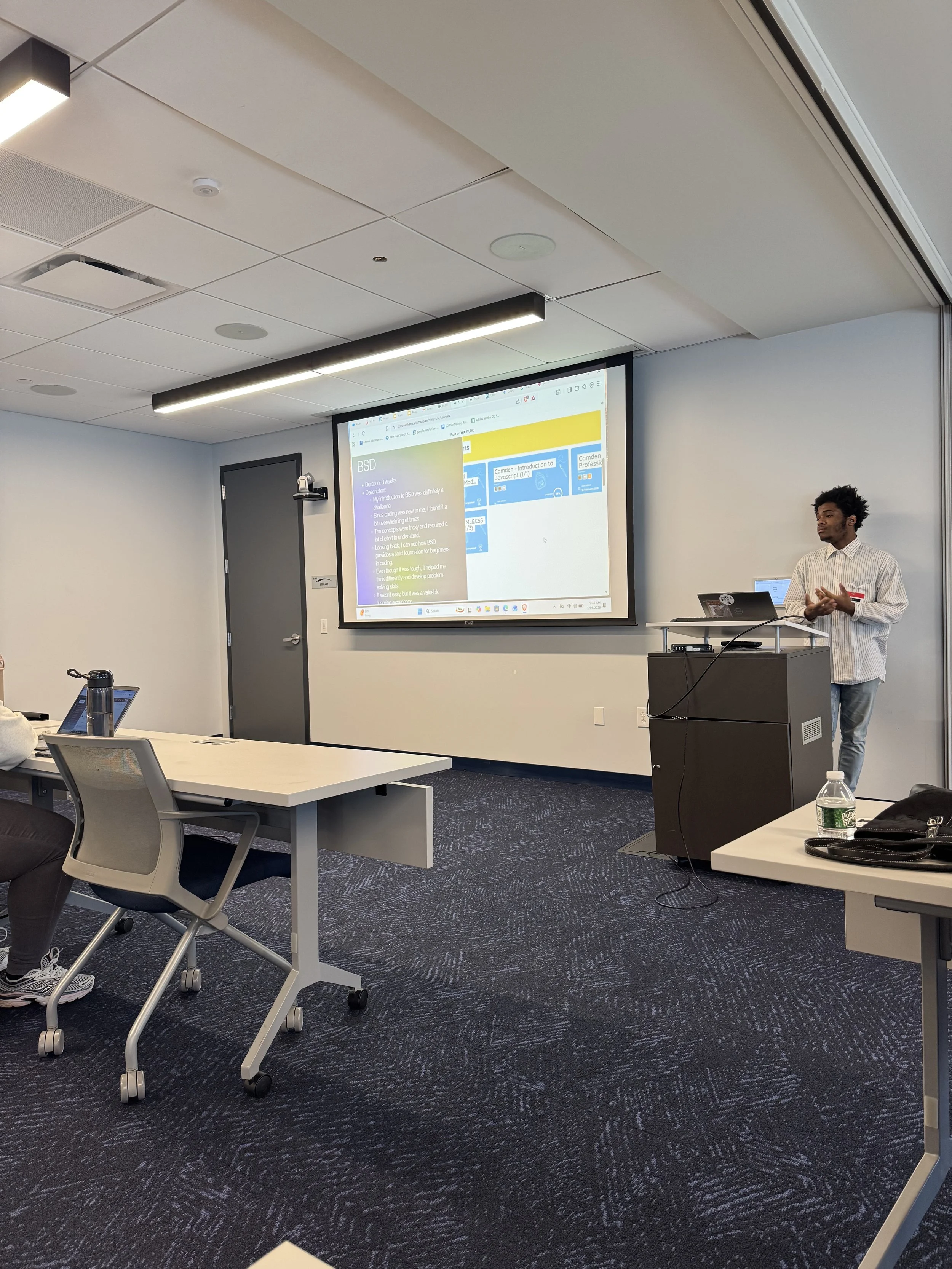
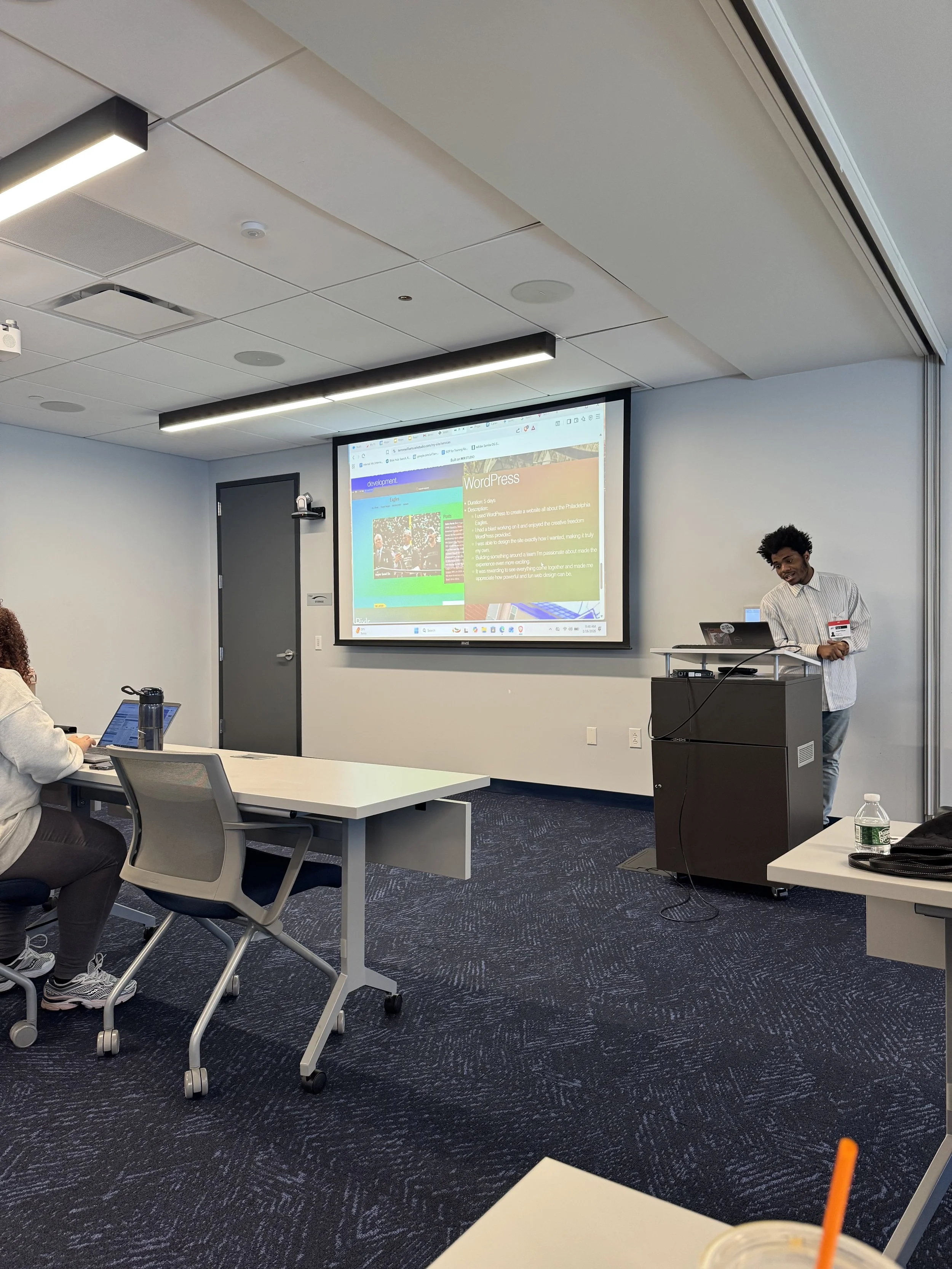
I don't hide my scar. In a conversation with a room full of young people, I'll roll up my pant leg and let them see it. The scar, accompanied by medical screws, is a reminder of a stolen car crash that could have cost me not just my leg, but my life. It’s also physical proof that the wrong path doesn’t have to be the final one.
Over the past year, I’ve served as a co-facilitator with the New Jersey Youth Voices Initiative (NJYVI), a statewide project uplifting youth voices about their educational experiences. It was born out of Newark, NJ through the Opportunity Youth Network (OYN). Young people like myself facilitated conversations with over 300 youth across Newark, Camden, and Trenton. I host conversations with Camden youth, establish community guidelines, and create a judgment-free environment where young people can transparently share their experiences in education. I sometimes show my leg during conversations, demonstrating what can happen if one chooses the wrong path while also being living proof that change is possible.
What I’ve learned from this work matters. Since joining the initiative, two major themes that have resonated with me are the impact of external factors and lack of academic support. During the first two years of the initiative, youth in Newark mentioned life outside of the classroom as an influential factor more than 700 times. Its impact is also true for Camden youth who shared outside pressures such as abuse and gang activity.
In terms of academic support, as an individual with ADHD, I learn at a slower pace and appreciate visual demonstrations. Teachers were not always willing to accommodate my learning style, and so I fell behind. This was a trend I noticed while speaking to other Camden youth. Young people shared that they struggled not because they did not want to learn but because their schools were not built to support how they learn.
I know these patterns intimately, because I lived them. I’m a Camden native who grew up in the Washington Park apartments. The younger version of me wasn’t very likable. I found myself in trouble frequently, stealing cars and hanging with the wrong crowd. The crash is what set my transformation in motion after I realized that I was lucky to walk away with only a scar and screws in my leg.
As a result of the accident, the pain medication I took caused me to be drowsy, and I struggled to get through the school day. Eventually, I left school entirely and was homeschooled for two years before returning as a senior. I experienced depression during that time because I felt shut out from the rest of the world.
At 17, I was kicked out of my home and faced a number of job rejections until I came across Hopeworks in Camden. Hopeworks is a non-profit organization that uses a trauma-informed approach to help young adults develop life skills. Hopeworks provided me with housing, food support, counseling, care, and love. It helped equip me with the resources I needed to transcend my circumstances. Simultaneously, I focused on self improvement and becoming a version of myself that I admired. Although it was challenging, I learned to accept help and ask questions before assuming intentions. I did not want to be known for "crashing out” so I changed how I responded to problems. Collectively, this challenged me to grow emotionally and release anger that accumulated during my adolescence. Growing up, I was violently abused and missed several days of school because I did not want anyone to spot my scars and contact social services. I feared that if social services got involved, it would make the situation worse.
Because I know what it takes to overcome these barriers, I am confident that other young people can do the same with the appropriate resources. That is why the work young people are doing through the NJYVI matters.
There is a misconception that disconnected youth choose disconnection - yet conversations with young people across the state tell a different story. I wanted to learn. I wanted to be in school. But I faced multiple barriers inside and outside of the classroom, struggled with my mental health, and felt like my voice meant nothing. Young people across the state have shared similar stories.
As someone who’s been in the room listening to youth for the past year, here’s what I suggest: school social workers visit homes weekly and school leaders explore and incorporate recommendations from youth during their summer preparation. And I want that to happen everywhere – not just in New Jersey.
My disconnection could have been prevented if someone had been there to listen. That is the whole premise behind the NJYVI: young people already know what is failing them, we just need to hear them.
About New Jersey Youth Voices Initiative
In 2023, young people in Newark, New Jersey grew tired of decisions being made without their input. They created the Newark Youth Voices Project and spoke with nearly 600 youth across the city in two years. Curious to learn more about their peers’ educational experiences across the state, they launched the New Jersey Youth Voices Initiative in 2025, hosting conversations with over 300 young people across Newark, Camden, and Trenton. Both youth-led projects are initiatives of the New Jersey Opportunity Youth Coalition (NJOYC), a network of organizations committed to advocating for policy change to remove the barriers that inhibit opportunity youth’s success. The coalition is comprised of 15 organizations convened by Opportunity Youth Network (OYN).